

Learn how indie beauty brands build a weekly creative QA loop using AI simulation to improve ad quality, reduce launch risk, and scale what works.
You spent $800 producing a TikTok skincare ad. It went live Monday. By Wednesday, it's sitting at a 0.4% CTR — while the organic post you shot on your iPhone is pulling 6% engagement. Sound familiar?
Indie beauty brands operate under a distinctive set of constraints. Budgets are lean, content volume is high, and the category moves fast enough that a creative angle that resonates in February can feel dated by April. The margin for error on any individual ad is smaller than it is for category incumbents with deep testing budgets — which means that launching a weak creative doesn't just cost money directly, it also consumes the attention and time of a small team that should be focused on what's working.
A weekly beauty brand creative testing QA loop addresses this problem structurally. Rather than evaluating creatives reactively after they fail in live spend, the loop builds a lightweight validation checkpoint into the standard content calendar — so that every creative that goes live has been evaluated before the first dollar is spent.
This article covers what a weekly creative QA loop looks like in practice for indie beauty marketing teams, how Klinko fits into it, and the specific checks that matter most for the cosmetics ad strategy and skincare brand ads context.
Why Indie Beauty Needs a QA Loop, Not Just A/B Testing
Traditional A/B testing works for brands with enough budget to run simultaneous variants at statistically meaningful scale. For most indie beauty brands, that's not the operating reality. A typical indie brand might run one to three active creatives at a time on TikTok or Reels, with weekly content turnover driven by the organic social calendar.
In this model, launching a weak creative doesn't just waste the test budget — it can meaningfully affect the account's overall performance signal during the test window. On TikTok and Meta, an ad that performs poorly in its first 24–48 hours can drag down account-level delivery quality scores, affecting distribution for stronger creatives running in the same period.
A QA loop changes the frame. Instead of testing to identify losers after launch, you screen to prevent losers from launching in the first place. The goal isn't perfect creatives — it's removing the obviously weak ones before they go live.
For beauty content quality specifically, the most common reasons indie beauty creatives underperform are:
- Hook is product-led rather than audience-led (opening with the product before establishing relevance to the viewer)
- Claim language triggers platform moderation or restricted reach ("clinically proven," "dermatologist approved" without accompanying qualification)
- Creative tone mismatches the platform — editorial aesthetics that work on Instagram don't always translate to TikTok's native content environment
- Cultural compliance gaps from trend references that have shifted in resonance since the concept was written
All four of these are identifiable before launch. That's what makes a pre-launch QA loop worth building.
The Weekly Creative QA Loop: How It Works
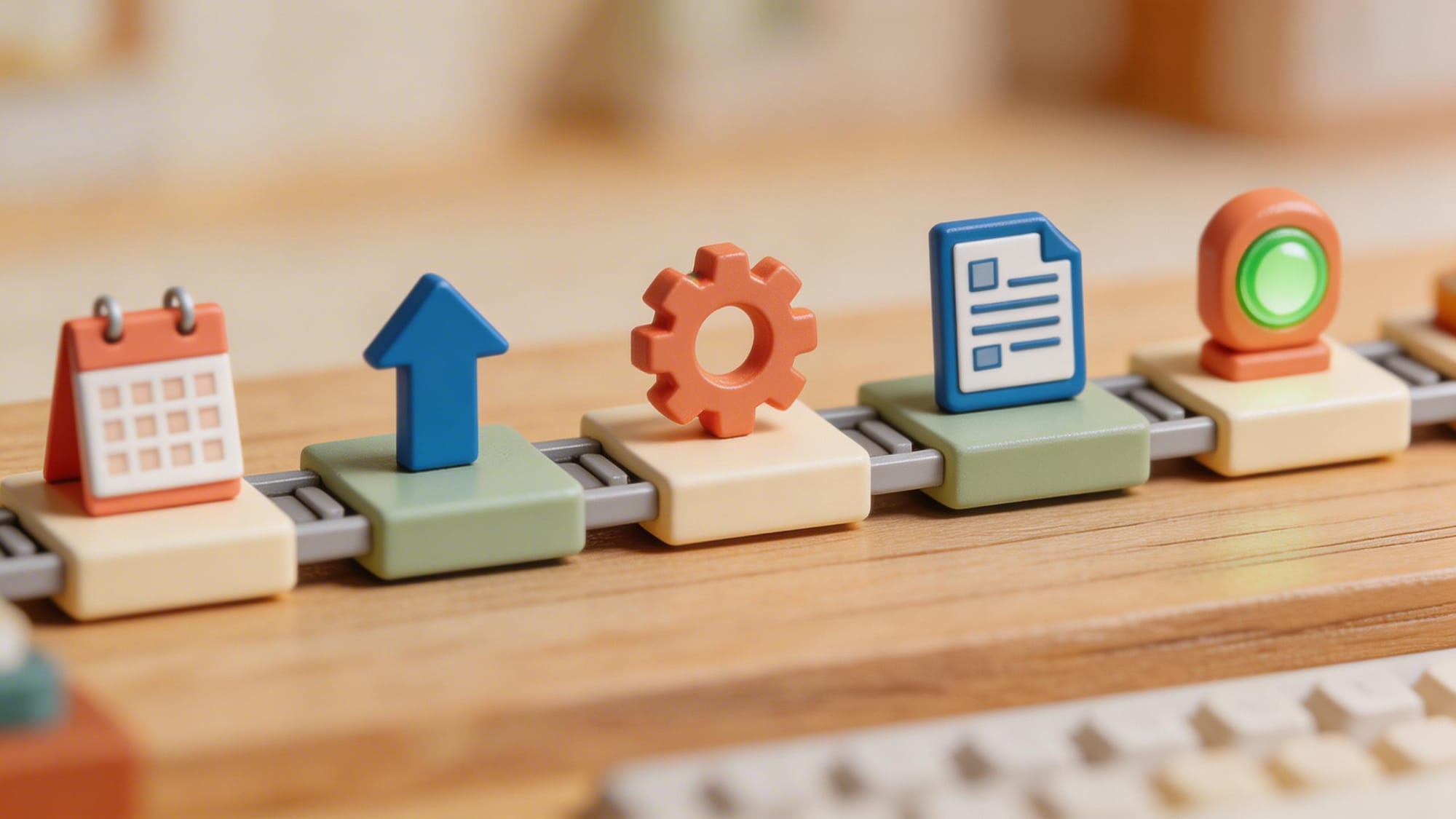
A weekly creative QA loop for an indie beauty brand typically runs on a Monday-to-Friday cadence, aligned with the content planning and publishing calendar:
Monday: Concept review
The week's planned creative concepts are finalized — hooks, key claims, visual direction, platform targets. At this stage, the team does a first-pass review against the QA checklist (covered below). Concepts with obvious hook or compliance issues are revised before simulation.
Tuesday–Wednesday: Simulation
Finalized concepts are uploaded to Klinko for pre-launch simulation. For most indie beauty teams, this is one to three creatives per week. Each simulation takes under two minutes and returns Hook Score, CTR Prediction, Virality Index, and Cultural Compliance Rating. The team reviews the scores and AI modification suggestions on Wednesday.
Thursday: Revision and re-simulation (if needed)
Creatives with significant Hook Score or Cultural Compliance issues are revised based on the AI suggestions. If structural changes were made to the hook or compliance language, a follow-up simulation confirms the revision moved the scores in the right direction.
Friday: Launch decision
Creatives that cleared the QA thresholds go into the publishing queue for the following week. Any creative that hasn't cleared thresholds is either held for further revision or deprioritized in favor of a stronger concept.
This cadence requires roughly two to three hours of total team time per week — spread across concept review, simulation sessions, and revision. For a team running a lean content operation, that's a tractable overhead that consistently pays back in reduced wasted spend and fewer failed launches.
The Beauty Brand Creative QA Checklist

Before uploading to Klinko, a pre-simulation first-pass checklist catches the most common and easily fixable issues in indie beauty marketing creatives:
Hook quality
- [ ] Does the opening establish a viewer-relevant context before introducing the product?
- [ ] Is the hook specific to a real situation, feeling, or outcome your target audience recognizes?
- [ ] Does the pacing and tone match the target platform (TikTok vs. Reels vs. YouTube Shorts)?
Claim language
- [ ] Are any "clinically proven," "dermatologist approved," or "scientifically tested" claims qualified or sourced?
- [ ] Does the copy avoid absolute superlatives ("the best," "the only," "guaranteed") without qualification?
- [ ] Are any before/after visual elements compliant with platform policies for the beauty/wellness category?
Offer clarity
- [ ] Is it clear what the viewer is being invited to do within the first 10–15 seconds?
- [ ] Is the CTA proportionate to the audience's likely awareness stage?
Cultural relevance
- [ ] Are any trend references or cultural signals still active and positively valenced for the North American market?
- [ ] Does the visual language reflect current platform aesthetics for the beauty category?
Creatives that pass this first-pass review go into Klinko simulation. Creatives that fail on obvious items get revised first — simulation is more valuable when it's evaluating a concept that's already cleared the basic quality bar.
What Klinko Catches That the Checklist Misses
The manual QA checklist handles the easily visible issues. Klinko's AI simulation catches the subtler ones — the issues that aren't obvious on internal review but that matter to an actual audience.
For beauty brand creative testing specifically, the simulation is most useful for:
- Hook resonance calibration. A hook that feels compelling internally may not register as relevant with the actual target demographic. Hook Score surfaces this gap before live spend — a hook the internal team rates highly but that scores low in simulation is a reliable signal that the team's perspective has drifted from the audience's.
- Platform-specific tone detection. The Cultural Compliance Rating flags tone and format mismatches that go beyond explicit policy issues. For skincare brand ads, a common pattern is editorial-style scripts that work well for an older demographic but score poorly with 18–24 TikTok audiences who expect faster pacing and more direct language.
- Claim language at the edge of policy. The Cultural Compliance Rating catches claim language that isn't technically prohibited but sits in the zone of restricted reach — phrases that trigger algorithmic scrutiny without necessarily violating explicit policies. For beauty and wellness brands, this zone is wider than most teams realize.
- Virality potential assessment. For indie beauty brands with strong organic community followings, the Virality Index provides signal on whether a paid creative has organic amplification potential — relevant for brands using paid seeding to drive organic UGC.
Thresholds for the Beauty Category
For indie beauty brands running on TikTok and Reels targeting 18–34 North American audiences, useful starting QA thresholds for Klinko scores are:
Hook Score: Flag for revision if below 55. Beauty category audiences on short-video platforms have high creative exposure and scroll fast — a hook that scores below 55 is unlikely to stop the scroll in a competitive feed.
CTR Prediction: Use for relative ranking between variants. If you're running two creative options, prioritize the one with the higher CTR Prediction regardless of absolute number.
Virality Index: For brands with organic community strategy, flag for review if below 45. For pure direct-response creatives, treat as secondary.
Cultural Compliance Rating: Flag for immediate revision if below 70. Beauty and wellness categories carry higher compliance risk than most, and a rating below 70 typically indicates at least one claim or visual element that needs to be addressed before live deployment.
These are starting thresholds, not fixed rules. Over two to three weeks of running the loop, teams typically develop a calibrated sense of which Klinko scores correlate with their specific audience's actual behavior — and can adjust thresholds accordingly.
Building the Loop Into Your Content Calendar
The practical challenge for most indie beauty teams isn't understanding the value of a QA loop — it's fitting it into an already compressed content calendar. A few structural choices make this tractable:
Run simulation at concept stage, not production stage. The biggest time saving comes from catching issues before full production rather than after. A text brief uploaded to Klinko returns the same four metrics as a finished video — if the concept scores poorly, you've saved the production time before spending it.
Batch simulations to one session per week. Rather than running simulations on an ad-hoc basis as concepts are ready, batch all of the week's concepts into a single Tuesday or Wednesday session. One consolidated session is easier to schedule and review than multiple scattered ones.
Build revision time into the calendar explicitly. The most common reason QA loops fail is that teams don't leave time to act on what they find. If every creative is finalized on Thursday for a Monday launch, there's no revision window. Moving concept finalization to Tuesday creates a two-day buffer for simulation and revision before the launch decision.
Use the AI modification suggestions as a revision brief. When Klinko flags a hook or compliance issue, the AI suggestions provide enough specificity to brief a revision directly. For indie teams without a dedicated copywriter, this turns what could be an open-ended revision task into a targeted single-element fix.
FAQ: Beauty Brand Creative Testing
Q: How does a QA loop differ from standard A/B testing for beauty brands?
A: Standard A/B testing identifies winners after launch by comparing live performance. A QA loop identifies and removes weak concepts before launch. For indie beauty brands with limited testing budgets, the QA loop is more efficient: it costs a fraction of live spend, returns results in minutes rather than days, and prevents weak creatives from affecting account-level delivery quality during the test window. The two approaches are complementary — the QA loop screens concepts before launch, and live A/B testing confirms and scales the strongest.
Q: What types of beauty creatives work best for Klinko simulation?
A: Klinko accepts videos under 200MB, images under 10MB, and text briefs under 2,000 characters. For early-stage QA before full production, text briefs work well for evaluating hook and offer framing. Finished short-form video — TikTok-style UGC, product demos, tutorials — can be evaluated as video uploads. The simulation returns the same four scored metrics regardless of format, so teams can test concepts at whatever production stage they're currently at.
Q: How do you handle cultural compliance issues specific to beauty and skincare ads?
A: The most common compliance triggers in beauty and skincare are: efficacy claims without qualification, before/after visual content, and ingredient-level claims that imply drug-like effects. In Klinko's simulation, these typically surface as low Cultural Compliance Rating scores with specific AI suggestions identifying the flagged language. The fix is usually targeted — revising one phrase or removing one visual element — rather than rebuilding the whole creative.
Q: Can Klinko evaluate UGC-style beauty creatives?
A: Yes. Klinko evaluates any video or image creative against the specified target demographic and platform. UGC-style content — creator-style tutorials, skin transformation walkthroughs, routine videos — can be uploaded and evaluated the same way as produced brand content. The Hook Score and Cultural Compliance Rating are both relevant for UGC-style beauty content, where authenticity signals and claim language are both important performance variables.
Starting Your Weekly QA Loop
Pick three to four upcoming creatives from your next content sprint and run them through Klinko before launch at klinko.ai. Compare the Hook Scores and Cultural Compliance Ratings against your internal expectations. Most teams find at least one creative where the simulation surfaces an issue — a hook that scores lower than expected, a claim phrase that flags low compliance — that they then address before launch.
After two to three cycles, the QA loop becomes routine. The checklist is familiar, the simulation session is scheduled, and the team has a calibrated sense of what Klinko scores mean for their specific audience. At that point, the loop is no longer overhead — it's just how beauty brand creative testing works at your brand.
The Free plan at klinko.ai gives new users 100 credits per day for the first six days, which covers multiple simulation sessions for a typical week's content sprint.


