

Audience intelligence is the practice of turning real-world audience signals into decisions about who to target, what to say, and what to build next. Unlike traditional market research that often ends in reports, audience intelligence aims for actionable outputs: segments, motivations, native language, and clear go/revise/cut priorities. In 2026, AI makes this workflow faster—but the goal is still better judgment, not more data.
Growth teams have never had more data. And yet most still struggle to answer the same question before every campaign: is this the right audience, and is this the right message? Audience intelligence is what closes that gap. Here's the complete guide. 📖
Audience Intelligence: Definition + Why It Matters in 2026
Audience intelligence = the systematic process of converting audience signals into strategic decisions.
The key word is decisions. Not reports. Not personas. Not dashboards.
Here's what changed in 2026: fragmented channels, faster launch cycles, and LLMs that now influence how audiences discover information. Growth teams can no longer rely on broad demographic targeting and hope. They need to know—before they build—which segment has the highest intent, what language resonates, and which direction is worth testing.
Good audience intelligence produces:
- Named segments with clear motivations and triggers
- Native language samples (exact phrases the audience uses)
- Ranked directions with go/revise/cut signals
- A message map ready for creative execution
Bad audience intelligence produces a report that nobody acts on.
How Audience Intelligence Works: Inputs → Processing → Outputs
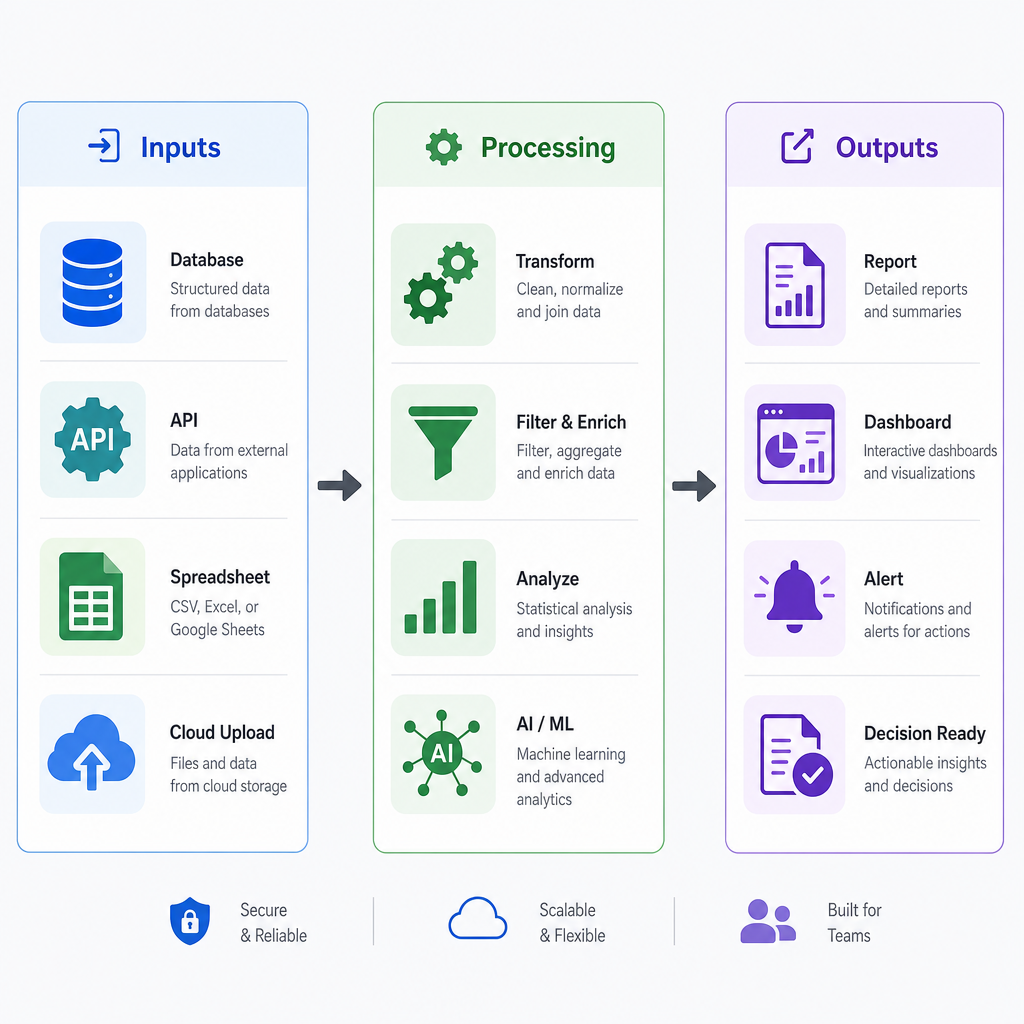
Inputs — Where signals come from:
- Online communities (Reddit, niche forums, Discord)
- Search queries and autocomplete data
- Competitor reviews (G2, Trustpilot, App Store)
- Social content and comment threads
- Customer conversations, sales calls, support tickets
Processing — What happens to signals:
- Clustering into segments and niches by motivation
- Motivation and constraint extraction
- Native language identification and tagging
- Message hypothesis generation
- Direction scoring and pre-screening
Outputs — What you walk away with:
- Segment map (who to target and why)
- Message map (what to say and how to prove it)
- Objections list (what will push back and how to address it)
- Creative angles and direction priorities (ranked go/revise/cut)
Audience Intelligence vs Adjacent Categories
Audience intelligence is frequently confused with related tools and practices. Here's how it differs:
| Category | Purpose | Typical outputs | Time horizon | Common failure mode |
|---|---|---|---|---|
| Social listening | Monitor conversations | Sentiment, volume, trends | Real-time / ongoing | Data without decisions |
| Market research | Understand the market | Reports, persona decks | Quarterly / annual | Insights without actions |
| Product analytics | Track in-product behavior | Funnel, retention, events | Ongoing post-launch | Useless pre-launch |
| CRM | Manage customer relationships | Contact history, pipeline | Ongoing | Descriptive, not predictive |
| Audience intelligence | Make pre-launch decisions | Segments, language, priorities | Sprint-based (days–weeks) | Confusing data for judgment |
The key differentiator: audience intelligence is designed to end with a decision, not a deliverable.
What You Can Do With It: 5 Practical Use Cases
- Use case 1 — Find high-intent segments. Instead of targeting "marketers," identify the specific niche (e.g., "B2B SaaS growth leads who are 60 days into a new role and need to show traction fast"). That segment has different urgency, language, and proof needs.
- Use case 2 — Extract native language for copy and hooks. Copy written in your audience's own words converts better than anything your team writes internally. Native language extraction is the highest-leverage output of audience intelligence.
- Use case 3 — Validate positioning and messages. Test whether your core claim maps to what your target segment actually cares about—before you write full assets or buy media.
- Use case 4 — Pre-screen creative directions before spend. Score 2–4 directions against audience fit, proof availability, and differentiation. Cut the weakest before you test anything.
- Use case 5 — Identify objections and alternatives. Know what your audience will push back on—and what they're currently using instead—before you write your first line of copy.
A Simple Workflow: Audience Intelligence Before Launch
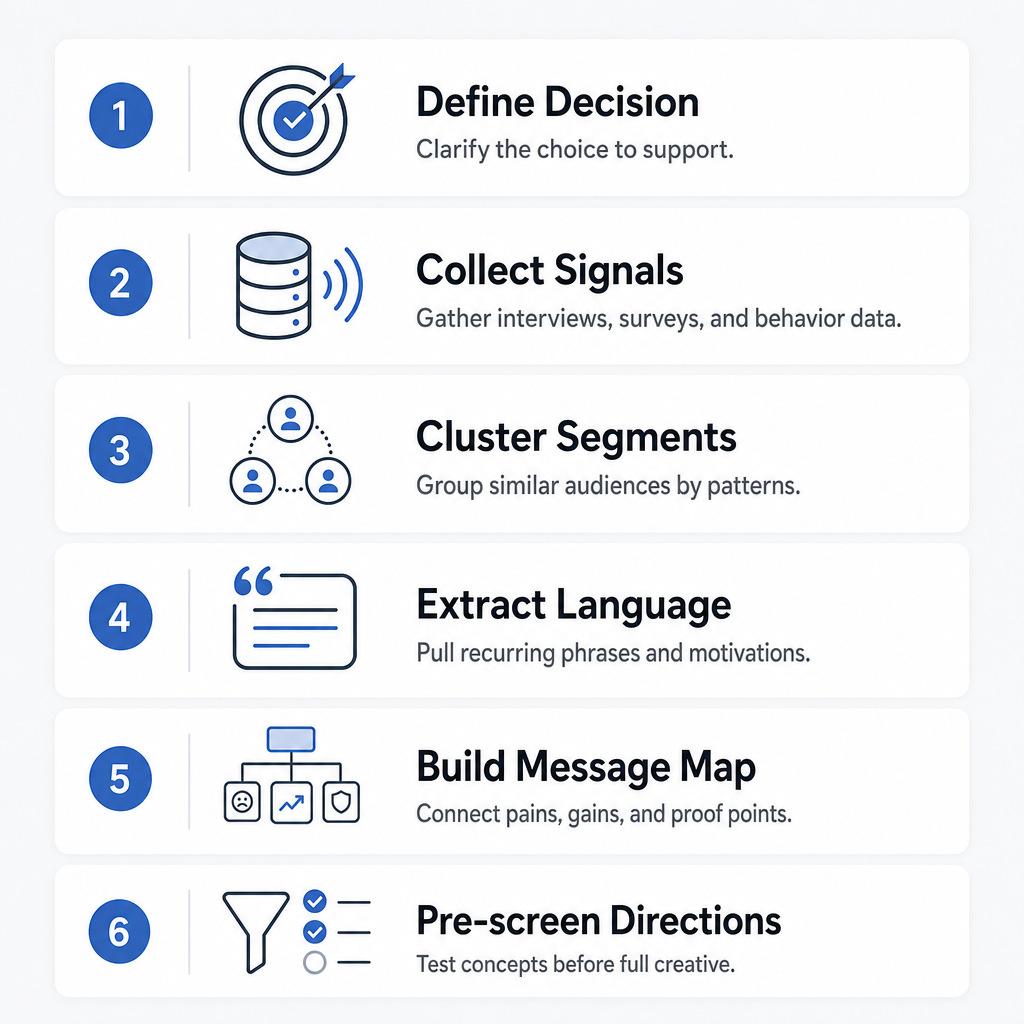
Step 1 — Define the decision.
Segment, message, or direction. One decision per sprint.
Tip: Write it as a testable hypothesis before collecting a single signal.
Step 2 — Collect 30–100 raw signals.
Communities, reviews, search queries, competitor content. Raw and unfiltered.
Tip: Prioritize sources where your audience expresses pain unprompted.
Step 3 — Cluster into 3–7 segments/niches.
Cluster by job-to-be-done, motivation, and constraints—not demographics.
Tip: Each segment should be specific enough that a real person would recognize themselves.
Step 4 — Extract motivations + native phrases.
Pull exact language: pain descriptions, desired outcomes, objections, alternatives.
Tip: Aim for 20–50 raw quotes tagged by segment. This is the language bank.
Step 5 — Build a message map.
Claim → proof → objection → contrast. One per target segment.
Tip: Keep it to one page. A rough map used in a test beats a polished one that stays in a doc.
Step 6 — Pre-screen 2–3 directions.
Score each on audience fit, proof availability, differentiation, and time-to-value. Go/revise/cut.
Tip: The goal isn't to find the "best" direction—it's to eliminate the worst ones before you test.
Pitfalls and Quality Checks
Even well-structured audience intelligence can mislead if you're not careful.
Common pitfalls:
- Personas without evidence. A persona without behavioral proof signals is a guess with a name.
- Sentiment ≠ motivation. Knowing people are frustrated doesn't tell you why or what they'd pay to fix.
- Generic insights without language proof. "Customers want simplicity" is useless without the raw quotes that prove it.
Quality checks before acting on any output:
- Do you have 30+ raw quotes backing each segment claim?
- Are your segments distinct enough that a person belongs to only one?
- Does your message map include a real objection—not just a sales pitch?
- Can you name a go/revise/cut decision the research supports?
Where Klinko Fits
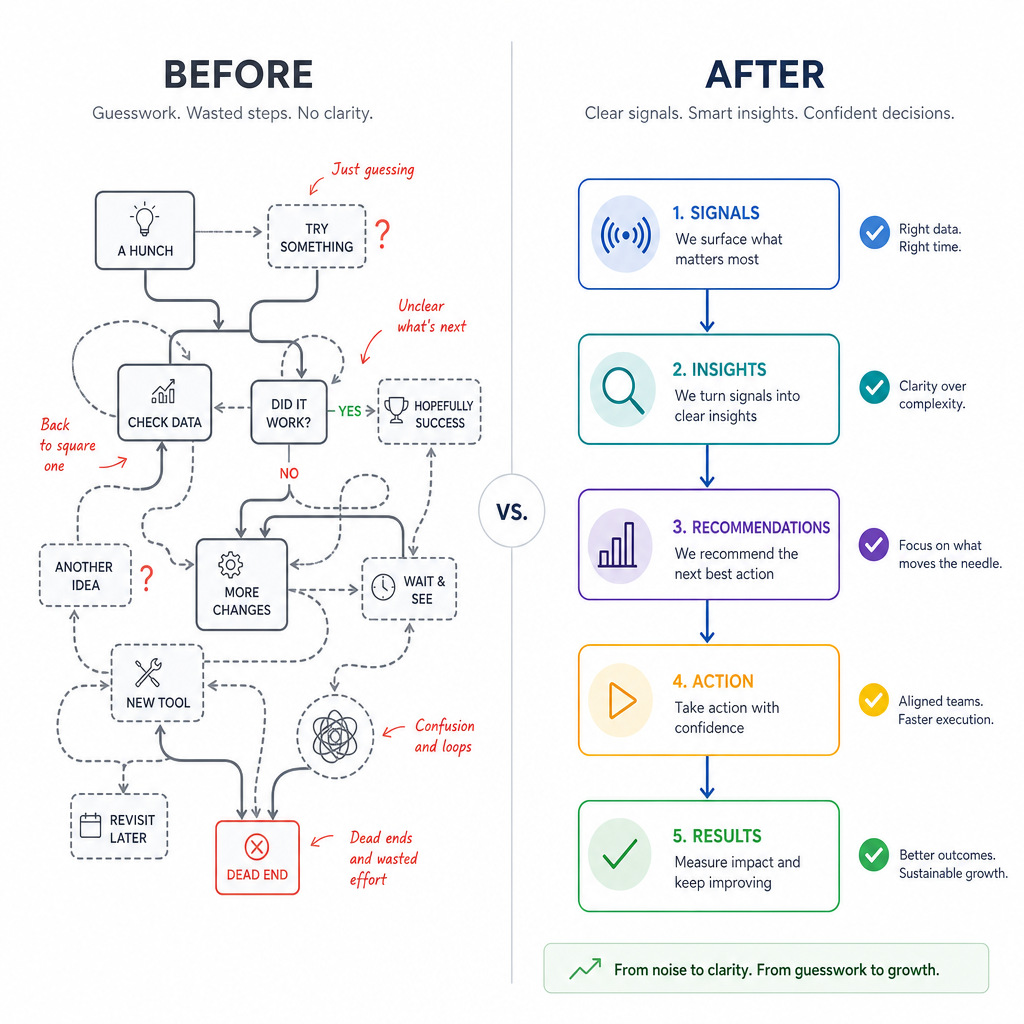
Klinko is an AI audience growth console built specifically for the decision layer of audience intelligence. It's not a monitoring dashboard. It doesn't do outbound. It doesn't publish content.
It's designed to help growth teams:
- Discover niches and segments from raw audience signals
- Extract audience language (native phrasing, objections, alternatives)
- Validate messages before writing full assets
- Pre-screen creative directions before spending on tests
If your team's bottleneck is deciding what direction is worth pursuing before you spend time and budget, Klinko is designed to make those decisions clearer.
FAQ
Q: Is audience intelligence the same as audience insights?
Insights are observations. Intelligence is insights translated into decisions and priorities. You can have great insights and still not know what to do next—audience intelligence closes that gap.
Q: Do I need big data to do this?
No. Small, high-quality signals (30–100 raw quotes from the right sources) can outperform large noisy datasets for pre-launch decision-making. Quality of source matters more than volume.
Q: Can AI replace traditional research?
It can accelerate early-stage decision support significantly. Deep research still matters for high-stakes bets—but for pre-launch direction calls, AI audience intelligence cuts time-to-decision from weeks to days.
Q: What's the fastest "first project"?
One message validation sprint: extract native language and top objections from 30–50 signals, then update your landing page headline. Measurable impact, one afternoon.
Decisions, Not Dashboards
If your team's bottleneck is deciding what direction is worth pursuing before you spend time and budget, an AI audience intelligence workflow like Klinko is designed to make those decisions clearer. Start with one sprint. One decision. One direction. The rest follows. 🎯
