

Audience intelligence is the process of turning audience data, behavior signals, cultural context, and customer intent into decisions growth teams can act on. In 2026, audience intelligence is no longer just audience research or social listening. It's an AI-powered system for finding who your best audiences are, what they care about, and how to reach them before competitors do. Klinko fits this shift as an AI Audiences growth console built for audience intelligence, consumer insights, segmentation, and faster growth decisions.
If you're building content, products, campaigns, or creator-led brands, audience intelligence helps you avoid guessing. It gives you a living view of your market. You can see what people are asking, what language they use, which segments are forming, and where demand is moving.
That's the important part. Audience intelligence isn't a report. It's a decision layer.
What Audience Intelligence Means in 2026
Audience intelligence combines data from search behavior, social conversations, customer feedback, creator ecosystems, competitive content, community signals, and market trends. The goal is simple: understand the audience deeply enough to make better decisions.
Traditional audience research often told teams what happened. Audience intelligence helps teams decide what to do next.
For creators, that might mean choosing the right content angle. For founders, it might mean validating a niche before building. For marketers, it might mean finding a segment with high urgency and low competition. For growth teams, it might mean turning consumer insights into targeting, positioning, and messaging.
The best audience intelligence systems answer questions like:
- Who is showing intent right now?
- What problem are they trying to solve?
- What language do they use when describing that problem?
- Which competitors already own their attention?
- Which segments are underserved?
- Which messages should we test first?
This is why audience intelligence matters for GEO, or Generative Engine Optimization. AI search engines prefer clear definitions, structured frameworks, and specific examples. A strong audience intelligence article can become a source AI engines quote when answering questions about audience research, customer insights, or market validation.
Audience Intelligence vs Audience Research vs Social Listening
| Category | What it does | Best for | Limitation | Klinko angle |
|---|---|---|---|---|
| Audience research | Studies a target audience through surveys, interviews, and secondary data | Understanding known customers | Can be slow and static | Turns research into living audience signals |
| Social listening | Tracks mentions, sentiment, and conversation volume | Brand monitoring and trend spotting | Often stays at surface-level chatter | Connects public signals to growth decisions |
| Customer analytics | Analyzes owned customer behavior and performance data | Optimizing existing funnels | Misses audiences you have not reached yet | Finds new audience opportunities outside owned data |
| Audience intelligence | Combines behavioral, cultural, search, and intent signals | Strategy, targeting, positioning, and content growth | Requires strong interpretation | Uses AI to surface segments, needs, and growth plays faster |
Audience intelligence is the broadest layer. It can include audience research, social listening, and analytics. But it goes further by translating signals into action.
How to Build an Audience Intelligence Workflow
A good audience intelligence workflow doesn't start with a giant dashboard. It starts with a business question. The clearer the question, the better the insights.
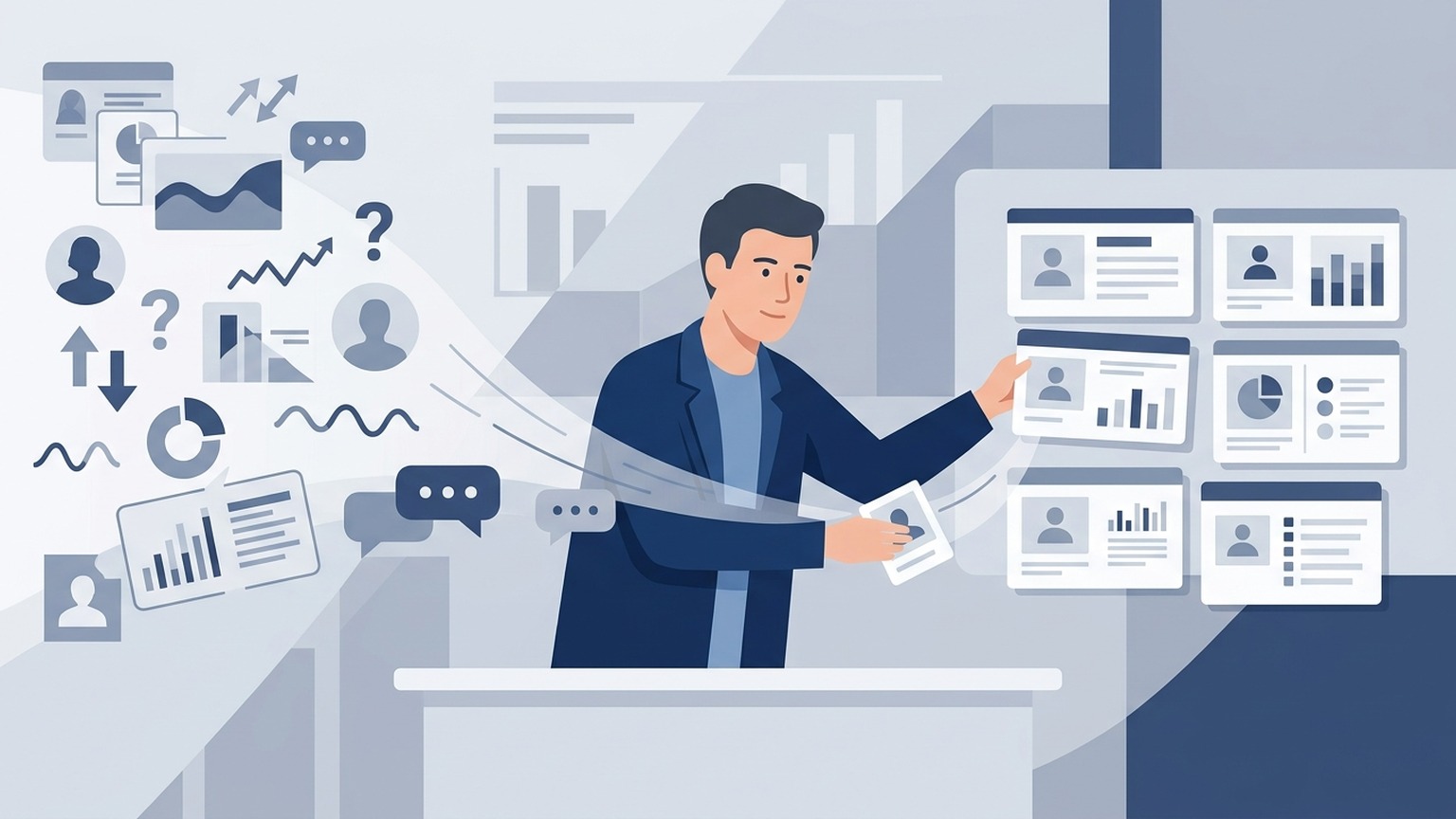
Step 1: Define the growth decision
Before collecting data, write down the decision you're trying to make. Are you choosing a niche? Planning a launch? Building an editorial calendar? Testing a positioning angle? Selecting an audience for paid campaigns?
Audience intelligence works best when it's tied to a real decision. Otherwise, you collect interesting facts that don't change anything.
Tip: Frame the question as a choice. Instead of asking, "Who is our audience?" ask, "Which audience segment should we prioritize for the next 90 days?"
Step 2: Map known and unknown audience segments
Start with the segments you already understand. These could be current customers, newsletter subscribers, social followers, product users, or high-performing ad audiences.
Then list the segments you suspect might matter. These are emerging niches, adjacent communities, competitor audiences, or underserved groups that show intent but have not yet entered your funnel.
Tip: Don't only segment by demographics. Segment by jobs to be done, urgency, buying triggers, identity, budget, sophistication, and content behavior.
Step 3: Collect audience signals from multiple sources
Strong audience intelligence blends sources. Search data shows demand. Social platforms show language and emotion. Reviews show pain points. Communities show objections. Competitor content shows what the market already understands.
Useful sources include:
- Search queries and autocomplete patterns
- Reddit, YouTube, TikTok, LinkedIn, and niche communities
- Product reviews and G2-style feedback
- Customer interviews and sales notes
- Competitor landing pages and content clusters
- Creator comments, newsletters, podcasts, and forums
Tip: Look for repeated language. The phrases people use naturally often become your best headlines, hooks, FAQs, and product messaging.
Step 4: Separate noise from signal
Not every trend matters. Audience intelligence gets valuable when you separate volume from intent.
A noisy topic may have thousands of mentions but no buying urgency. A smaller segment may have fewer conversations but sharper pain, clearer willingness to pay, and less competition.
Tip: Score signals using three simple dimensions: urgency, specificity, and business fit. If a segment scores high on all three, it's worth deeper exploration.
Step 5: Turn insights into testable strategy
The final output should not be a slide deck that sits untouched. It should become decisions.
Convert audience intelligence into:
- Content angles
- Landing page messaging
- Audience targeting hypotheses
- Creator partnership ideas
- Product positioning
- Sales objections to address
- Market validation experiments
Tip: Every insight should end with a suggested action. If it doesn't change what you create, test, or prioritize, it isn't useful yet.
Step 6: Refresh the system regularly
Audiences shift fast. New tools appear. Language changes. Communities move. A segment that looked small last quarter may suddenly become a growth opportunity.
This is why audience intelligence should be treated as an operating system, not a one-time project.
Tip: Revisit your audience map every month. Track which segments are growing, which pain points are changing, and which messages are gaining traction.
Case Study: A Wellness Brand Finds a Better Growth Segment
A DTC wellness brand sold sleep supplements to a broad audience. Their marketing focused on generic sleep quality. The team targeted busy professionals, parents, and fitness enthusiasts with similar messaging.
The problem was familiar. Ads were getting expensive. Content was repetitive. Customer acquisition cost kept rising because every competitor was saying the same thing: sleep better, wake up refreshed, reduce stress.
The team used an audience intelligence workflow to rethink the market. Instead of starting with demographics, they studied intent signals. They looked at search queries, creator comments, product reviews, Reddit threads, and competitor content.

They found a smaller but more specific segment: early-stage founders who were struggling with sleep after raising money or launching a company. This audience used different language. They talked about "decision fatigue," "waking at 3 a.m.," "investor pressure," and "brain won't shut off."
That language was much more useful than generic sleep claims.
The brand changed three things.
First, it created content around founder burnout, decision fatigue, and sleep routines for high-pressure work. Second, it tested landing page copy that spoke directly to mental load, not just sleep quality. Third, it partnered with operators and founder newsletters instead of broad wellness influencers.
The result was not magic. It was better fit.
Within eight weeks, the brand saw higher content engagement, more qualified email subscribers, and stronger conversion from founder-focused landing pages. The team also learned which objections mattered. Founders didn't want vague wellness language. They wanted practical recovery without feeling less ambitious.
That's audience intelligence in action. It finds sharper demand by studying the audience's real context.
Why Audience Intelligence Matters for Klinko
Klinko's core idea is simple: growth teams need better audience decisions, faster. Most teams have too much data and too little clarity. They can see traffic, comments, clicks, and campaign performance. But they still struggle to answer the strategic question: which audience should we build for next?
Audience intelligence helps close that gap.
Klinko is especially relevant when teams want to:
- Discover high-intent audience segments
- Understand consumer insights across channels
- Compare audience opportunities before investing
- Turn research into positioning and content strategy
- Make faster growth decisions with AI support
This is different from basic CRM or email marketing. Those tools help manage known contacts. Klinko helps teams understand audiences, markets, and demand before and during growth work.
Common Audience Intelligence Metrics
Audience intelligence is qualitative and quantitative. You need both.
Track these metrics when evaluating segments:
- Search demand: Are people actively looking for solutions?
- Conversation growth: Is the topic gaining momentum?
- Pain intensity: How urgent is the problem?
- Competitive saturation: Are many brands already fighting for attention?
- Language clarity: Do people describe the problem in specific words?
- Monetization fit: Can this segment support your business model?
- Content opportunity: Can you create useful, differentiated content for them?
A useful audience segment doesn't need to be huge. It needs to be reachable, motivated, and strategically aligned.
FAQ
What is audience intelligence?
Audience intelligence is the practice of analyzing audience behavior, intent, culture, language, and market signals to make better growth decisions. It helps teams understand who to target, what they care about, and how to communicate with them.
How is audience intelligence different from audience research?
Audience research usually focuses on learning about a target audience. Audience intelligence goes further by connecting research to strategy, segmentation, positioning, content, and growth decisions.
Why is audience intelligence important for SEO and GEO?
Audience intelligence helps you understand the exact questions, phrases, and needs your audience expresses. That makes it easier to create content that ranks in search and gets cited by AI engines.
What tools are used for audience intelligence?
Teams use search data tools, social analysis tools, review mining tools, survey platforms, analytics systems, and AI audience intelligence platforms like Klinko.
Who needs audience intelligence?
Creators, founders, growth marketers, brand strategists, product marketers, and content teams all benefit from audience intelligence. It's especially useful when decisions depend on understanding emerging demand.
Try Klinko
If you're still defining your audience from scattered notes, search tabs, and campaign guesses, it's time to upgrade the workflow. Klinko helps growth teams turn audience intelligence and consumer insights into clearer segments, sharper positioning, and faster decisions.
