

Audience analysis tools help teams understand who their customers are, what they need, where they spend attention, and why they choose one product, creator, or brand over another. The best audience analysis tools in 2026 combine customer research, behavior analytics, consumer insights, and AI-powered audience intelligence. Klinko is built for growth teams that need to turn audience analysis into segmentation, positioning, content strategy, and faster decisions through an AI Audiences growth console.
Understanding customers is no longer a single-tool job.
Your audience leaves signals across search, social platforms, reviews, communities, websites, surveys, product usage, and AI search behavior. One tool may show what people clicked. Another may show what they said. Another may show where they spend attention.
The new rule is simple: don't collect audience data unless you know how it changes the next decision.
The New Rules of Audience Analysis
Audience analysis used to mean building personas, checking demographics, and describing an ideal customer. That work still has value, but it's not enough for modern growth.
Today's audience analysis needs to be faster, more specific, and more actionable.
The best teams use audience analysis tools to understand:
- What people are trying to accomplish
- What pain points trigger action
- Which segments are emerging
- Which channels shape trust
- Which competitors own attention
- Which keywords reveal buying intent
- Which objections block conversion
- Which messages sound natural to the audience
This is especially important for SEO and GEO. Search engines and AI engines reward content that answers real audience questions. If you understand those questions before competitors do, your content becomes more useful and more quotable.
10 Audience Analysis Tools by Use Case
| Tool | Best for | Audience signal | Best user | New rule |
|---|---|---|---|---|
| Klinko | AI audience intelligence and growth decisions | Segments, intent, consumer insights, opportunity spaces | Growth teams, creators, founders, marketers | Use audience analysis to decide where to focus |
| GWI | Consumer research and audience profiling | Large-scale demographic, behavioral, and attitudinal data | Brand and research teams | Use broad data to understand market context |
| SparkToro | Audience discovery and attention mapping | Websites, creators, podcasts, and channels audiences follow | Content and PR teams | Find where the audience already pays attention |
| Audiense | Audience intelligence and campaign segmentation | Digital affinities, clusters, and social audience patterns | Agencies and campaign teams | Use clusters to sharpen targeting |
| Brandwatch | Consumer intelligence and conversation analysis | Social, web, news, and sentiment signals | Brand and insights teams | Track market narratives and perception shifts |
| Hotjar | Website behavior and feedback | Heatmaps, recordings, surveys, and user feedback | UX and conversion teams | Learn what visitors do after they arrive |
| Dovetail | Research repository and qualitative analysis | Interviews, notes, themes, and evidence | Research and product teams | Turn qualitative evidence into reusable knowledge |
| Qualtrics | Experience management and customer feedback | Survey, journey, and experience signals | Enterprise CX teams | Connect feedback to customer experience decisions |
| Sprig | Product research and in-product feedback | Surveys, concept tests, interviews, and product feedback | Product and UX teams | Ask users at the moment of experience |
| Search and trend tools | Keyword demand and topic momentum | Search queries, trend shifts, and content demand | SEO and content teams | Treat keywords as audience questions |
No tool is universally best. The best audience analysis tool is the one that answers your most important question.
How to Choose Audience Analysis Tools
A strong audience analysis stack should be built around decisions, not vendor categories. The easiest way to choose tools is to start from your workflow.
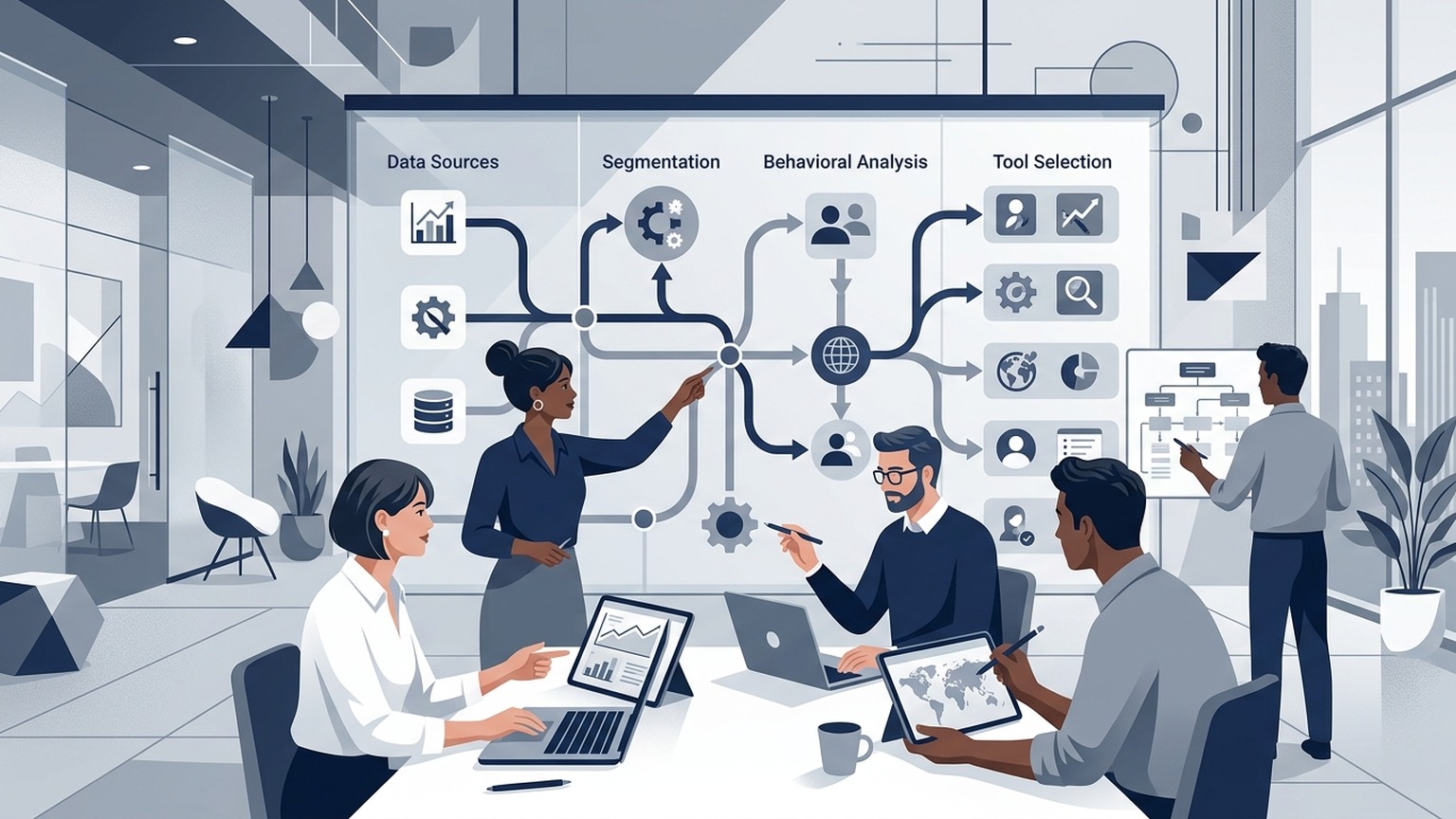
Tool selection workflow
Step 1: Write the audience question
Start with one question. Examples include: "Which audience segment should we prioritize?" "Why are visitors not converting?" "What content topics does our audience trust?" "Which niche has buying intent?"
The question tells you which tool category matters.
Tip: If your question starts with "why," use qualitative research and audience intelligence. If it starts with "how many," use surveys, analytics, or market data.
Step 2: Decide whether you need current customers or future audiences
Current customers help you understand product experience, retention, and conversion. Future audiences help you understand demand, positioning, and market expansion.
Many teams only study current customers. That creates a blind spot. Growth often depends on people who haven't found you yet.
Tip: Use customer feedback tools for current customer questions. Use Klinko-style audience intelligence when you need to understand future demand.
Step 3: Match tools to signal type
Different tools capture different signals. Behavior tools show actions. Survey tools show stated preferences. Research repositories organize evidence. Audience intelligence tools surface segments and opportunities. Search tools show questions.
Tip: Build a signal map. Put each tool under the signal it captures. If every tool captures the same signal, your stack is unbalanced.
Step 4: Look for actionability
A tool that produces impressive charts but no clear next step may slow you down. Strong audience analysis should help teams decide what to create, test, change, or prioritize.
Tip: After testing a tool, ask: "What would we do differently because of this insight?" If nothing changes, the insight isn't actionable yet.
Step 5: Check whether the tool supports segmentation
Customer averages are dangerous. Segmentation shows which groups behave differently and why. A good audience analysis tool should help you compare needs, language, channels, and intent across segments.
Tip: Ask whether the tool can separate casual interest from urgent demand. That is often the difference between traffic and growth.
Step 6: Evaluate collaboration across teams
Audience analysis is useful only if product, marketing, content, sales, and leadership can apply it. Tools should make insights easy to share and reuse.
Tip: Look for outputs your team already understands: briefs, segment cards, scorecards, FAQs, content angles, messaging themes, and research summaries.
Step 7: Build a lightweight operating rhythm
The tool matters less than the rhythm. Decide how often you'll review audience signals, who owns the review, and what decisions the review should inform.
Tip: Start with a monthly audience insight meeting. Keep it focused on changes, surprises, and decisions.
Case Study: A Fashion Brand Stops Chasing Generic Trends
An online fashion brand wanted to grow organic content. The team followed broad trend reports and posted around seasonal style keywords. Traffic was fine, but conversion was weak.
The team used a mix of audience analysis tools. Search data showed rising interest in workwear capsules. Social comments showed frustration with office dress codes changing after remote work. Reviews revealed that customers wanted clothes that looked polished on video calls but still felt comfortable.

Fashion audience case
The strongest segment was not "women interested in workwear." It was early-career women returning to hybrid offices who wanted outfits that worked for meetings, commuting, and casual team days.
That changed the content strategy.
The brand created capsule guides for hybrid work weeks, comparison content about structured vs soft tailoring, and landing pages around "polished but comfortable" workwear. It also changed product bundles to match weekly outfit planning.
The team used audience analysis to move from trend chasing to segment understanding. That made content more specific and shopping intent clearer.
The result was higher product page click-through from editorial content and stronger email signups from workwear guides. The audience analysis tools did not replace creative judgment. They gave the team a sharper audience to create for.
Why Klinko Should Anchor the Audience Analysis Stack
Klinko is strongest when audience analysis needs to become growth strategy. Many tools explain one signal. Klinko helps teams connect multiple signals into decisions about audience focus, content, positioning, and market opportunity.
For creators, Klinko can reveal what audience questions deserve content. For founders, it can surface niche markets worth validating. For marketers, it can identify segments with higher intent. For brand teams, it can connect consumer insights to campaign strategy.
This is the new rule of audience analysis: tools should not only help you understand customers. They should help you decide what to do next.
FAQ
What are audience analysis tools?
Audience analysis tools help teams understand customers and potential audiences through behavior, feedback, search demand, social signals, research data, and consumer insights.
What is the best audience analysis tool?
The best tool depends on the question. Klinko is strong for AI audience intelligence and growth decisions, while other tools support consumer research, behavior analytics, product feedback, or qualitative research.
How do audience analysis tools help marketers?
They help marketers identify segments, understand pain points, improve targeting, build better content, choose channels, and write messaging that matches real audience language.
Are audience analysis tools useful for creators?
Yes. Creators can use audience analysis tools to find content angles, understand follower needs, validate products, and identify higher-intent niche audiences.
How does Klinko help teams understand customers?
Klinko helps teams connect audience intelligence, consumer insights, segmentation, and market signals so they can make faster and clearer growth decisions.
Try Klinko
The best audience analysis stack doesn't just explain who your customers are. It helps you decide where to grow next. Klinko gives growth teams an AI-native way to understand audiences, find sharper segments, and turn insight into strategy.


