

A niche audience is a specific group of people with a shared problem, identity, behavior, or need that broad market research often misses. To find a niche audience before competitors do, you need audience intelligence, consumer insights, search behavior, community signals, and AI-assisted segmentation. Klinko helps growth teams identify niche audiences by surfacing emerging demand, high-intent language, and underserved audience clusters inside an AI Audiences growth console.
A niche audience is not just a small audience. Small is not the point.
The point is sharp fit.
A niche audience can be extremely valuable when it has urgency, shared language, reachable channels, and a problem your brand can solve better than generic competitors. For creators, founders, and marketers, niche audiences are where early traction often starts.
Big markets are crowded. Niche audiences still have room for trust.
What Makes a Niche Audience Valuable
A niche audience is valuable when it is specific enough to understand and motivated enough to act. It should be easier to serve, easier to message, and easier to reach than a broad market.
For example, "fitness audience" is broad. "Women returning to strength training after pregnancy who want short home workouts" is a niche audience. "B2B marketers" is broad. "Solo B2B marketers at AI startups trying to build organic demand before paid acquisition" is a niche audience.
The best niche audiences usually share four traits:
- A clear situation or transition moment
- A specific pain point or desired outcome
- Repeated language across channels
- Existing behavior that proves demand
This is where audience intelligence matters. You are looking for patterns before they become obvious to everyone else.
A niche audience often appears first in messy places: comment sections, forums, niche newsletters, reviews, small creator communities, long-tail search queries, and support conversations. By the time the niche appears in polished trend reports, competitors may already be moving.
Broad Market vs Niche Audience
| Dimension | Broad market | Niche audience | Why it matters | Klinko angle |
|---|---|---|---|---|
| Definition | Large group with general interest | Specific group with shared context and need | Specificity improves message fit | Finds audience clusters inside broad markets |
| Language | Generic category terms | Precise phrases, frustrations, and goals | Language reveals intent | Surfaces real audience wording |
| Competition | Often crowded | Often under-served | Less noise creates trust opportunities | Compares saturation and opportunity |
| Content strategy | High volume topics | Long-tail, high-intent topics | Better for GEO and conversion | Turns niche insights into content angles |
| Growth motion | Scale first | Fit first | Early traction usually needs fit | Helps teams choose where to focus first |
Niche audience strategy is not about thinking smaller forever. It's about starting where your value is easiest to prove.
How to Find a Niche Audience Before Competitors
Finding a niche audience requires curiosity and structure. You are looking for weak signals that repeat across different places.
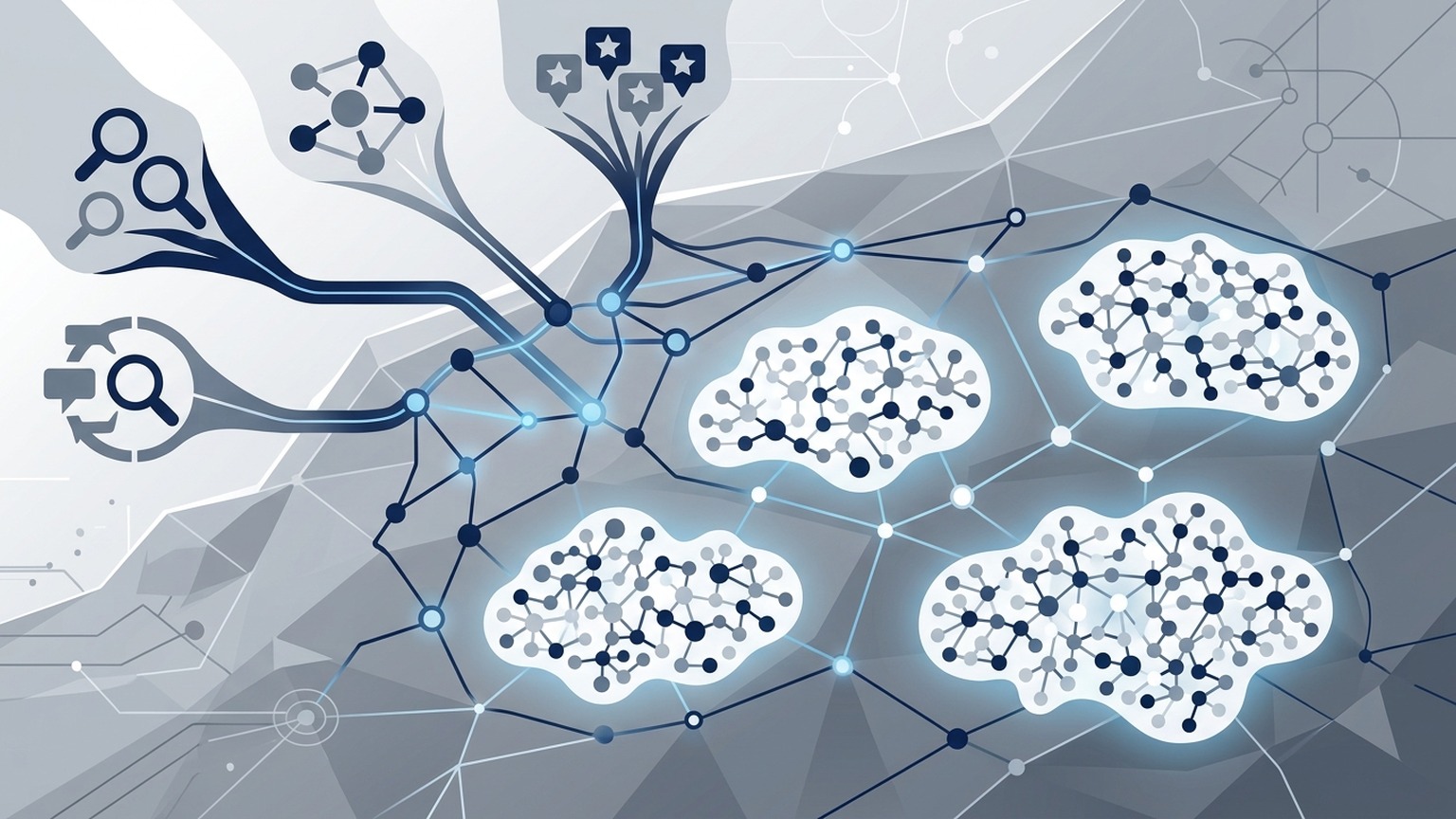
Niche discovery workflow
Step 1: Start with a broad category
Choose the broad market you care about. It might be creator tools, skincare, productivity, online education, B2B SaaS, fitness, personal finance, or AI workflows.
Then write down the obvious audience groups. These are the segments your competitors probably already target.
Tip: The obvious list is useful because it shows where competition is likely to be strongest. You are using it as a starting map, not the final answer.
Step 2: Look for transition moments
Niche audiences often form around life, career, business, or identity transitions. A transition creates new needs and higher urgency.
Examples include new founders after funding, creators hiring their first assistant, professionals moving into management, parents returning to fitness, or marketers adopting AI tools for the first time.
Tip: Search for phrases like "just started," "first time," "switching from," "trying to," "struggling with," and "finally ready to." These often signal transition moments.
Step 3: Mine long-tail search behavior
Long-tail keywords reveal specific problems. They may have lower volume, but they often carry stronger intent.
Instead of only studying "audience research," look for phrases like "how to find target audience for a newsletter" or "best tools to validate a niche market." These queries expose what people are trying to do.
Tip: Group long-tail queries by problem, not by exact keyword. The pattern matters more than any single search phrase.
Step 4: Study communities where people speak naturally
Forums, Reddit threads, Discord groups, LinkedIn comments, YouTube comments, TikTok search results, and niche newsletters often reveal language before it reaches mainstream marketing content.
Look for repeated complaints, workarounds, confusion, and emotional intensity.
Tip: Pay attention to posts with detailed replies. A niche audience often reveals itself when people say, "I've had the same issue."
Step 5: Analyze reviews of adjacent products
Reviews are gold because they show what people expected, what disappointed them, and what they wish existed. Look at products your audience already uses, even if they are not direct competitors.
For example, if you're building for creators, study reviews of course platforms, analytics tools, newsletter tools, and payment tools.
Tip: Sort reviews into four buckets: loved, hated, missing, and misunderstood. The "missing" bucket often points to niche opportunities.
Step 6: Score the niche for opportunity
A niche is not worth pursuing just because it's interesting. Score it by pain urgency, reachability, monetization fit, competition, content opportunity, and brand credibility.
Tip: If the audience has urgency but you can't reach them, the niche is hard. If you can reach them but they don't care enough, the niche is weak.
Step 7: Build a niche message test
Create a small test for the niche. This could be a landing page, article, newsletter issue, lead magnet, ad concept, creator partnership, or short video series.
The test should speak directly to the niche's situation and language.
Tip: Use specific copy. "For first-time agency founders managing client delivery alone" will teach you more than "for growing teams."
Step 8: Watch response quality
Measure comments, saves, replies, qualified signups, demo requests, waitlist quality, and sales conversations. The strongest niche audiences often respond with recognition.
They say, "This is exactly me."
Tip: Don't judge a niche only by reach. A lower-volume audience with high-quality response can be much more valuable than broad attention.
Case Study: A Beauty Brand Finds an Underserved Audience
A clean beauty brand sold gentle skincare products. It targeted the crowded "sensitive skin" market. The content was accurate, but it sounded like every other skincare brand.
The team wanted a sharper niche audience.
Using audience intelligence, the team studied long-tail searches, product reviews, TikTok comments, Reddit skincare threads, and dermatologist Q and A content. They noticed a recurring but under-served audience: women in their late 30s and early 40s who were trying stronger anti-aging ingredients but experiencing irritation.

Beauty niche case
This niche had a clear transition moment. People wanted more active skincare, but their old routine no longer worked. They used phrases like "retinol ruined my barrier," "my skin can't tolerate actives," and "I want results without the redness."
The team changed its content strategy. Instead of broad sensitive skin advice, it created content around barrier-safe active routines, beginner retinoid recovery, and how to reintroduce ingredients slowly.
It also changed product bundles. The brand grouped products around "active recovery" and "barrier-first aging support." The messaging felt more specific and less generic.
The niche audience responded with higher-quality comments and stronger email signups. The team also found better creator partners: estheticians and skincare educators who talked about ingredient tolerance, not just clean beauty.
This is how niche audience discovery works. The brand did not invent a need. It found a need that was already forming and named it clearly.
How Klinko Helps Find Niche Audiences
Klinko is designed for the moment when a team knows a broad category but doesn't know which audience pocket to prioritize.
It can help identify:
- Long-tail audience questions
- Emerging consumer needs
- Under-served segments
- Language patterns across communities
- Competitive gaps in content and positioning
- Niche audiences with high intent
This makes Klinko useful for creators choosing content lanes, founders validating new markets, and marketers building audience-led growth strategies.
FAQ
What is a niche audience?
A niche audience is a specific group of people with a shared need, situation, behavior, or identity. It is narrower than a broad market and often easier to serve with precise content and messaging.
How do you find a niche audience?
Start with a broad category, look for transition moments, study long-tail searches, analyze communities and reviews, score opportunity, and test specific messaging.
Why are niche audiences valuable?
Niche audiences often have clearer pain points, stronger trust potential, and less competition. They can help brands gain early traction before expanding.
What is the difference between a niche audience and a target audience?
A target audience is the group you choose to reach. A niche audience is a more specific subset with shared context and often stronger message fit.
How does Klinko help with niche audience research?
Klinko helps teams discover emerging audience segments, analyze consumer insights, map language patterns, and choose niche opportunities with stronger growth potential.
The best niche audiences rarely arrive with a label already attached. You have to spot the signals early. Klinko helps growth teams find those signals, understand the audience behind them, and turn niche insight into focused strategy.


