

Audience targeting is the process of choosing which audience segments to reach, why they are worth prioritizing, and how to tailor your message, channel, and offer to them. In 2026, effective audience targeting depends on audience intelligence, consumer insights, and AI-assisted segmentation, not broad demographic assumptions. Klinko helps growth teams move from audience research to targeting strategy by surfacing high-intent segments, pain points, and messaging angles inside an AI Audiences growth console.
The old targeting playbook was simple: pick an age range, location, interest, and platform. That worked when channels were cheaper and competition was lighter.
Today, it's too blunt.
Better audience targeting starts with insight. You need to know what people are trying to achieve, what triggers their search, what language they use, and which audience pockets are still under-served.
Audience Targeting Starts With Insight
Audience targeting is often treated as a media-buying task. But the best targeting decisions happen before a campaign is built.
The first question is not "Which platform should we target?" The first question is "Which audience deserves focus?"
A creator deciding what to publish, a founder deciding which niche to validate, and a marketer deciding which campaign to launch are all doing audience targeting. They are choosing attention. They are choosing who to serve first.
Strong audience targeting combines four inputs:
- Audience intelligence: who the segment is and how it behaves
- Consumer insights: what the segment wants, fears, and values
- Market context: what competitors already own
- Growth strategy: which audience can move the business forward
When these inputs are missing, targeting becomes guesswork. You may reach people, but not the people most likely to care.
Traditional Targeting vs AI-Native Audience Targeting
| Targeting approach | How it works | What it optimizes for | Main risk | Klinko angle |
|---|---|---|---|---|
| Demographic targeting | Groups people by age, gender, location, income, or job title | Basic reach | Assumes similar people want the same thing | Adds needs, intent, and behavior context |
| Interest targeting | Uses platform-defined interests and behaviors | Campaign delivery | Can be broad and unstable | Finds sharper audience themes before activation |
| Persona targeting | Builds fictional profiles of ideal customers | Messaging alignment | Can become static or overly polished | Refreshes personas with live audience signals |
| AI-native audience targeting | Uses intent, language, pain points, and market signals to define segments | Growth decisions and message fit | Needs clear strategic judgment | Turns audience intelligence into practical targeting plays |
The strongest audience targeting strategy is not more complex. It's more specific.
How to Build an Audience Targeting Strategy
A good audience targeting playbook moves from insight to hypothesis to execution. It should help your team decide what to test, where to show up, and how to speak.
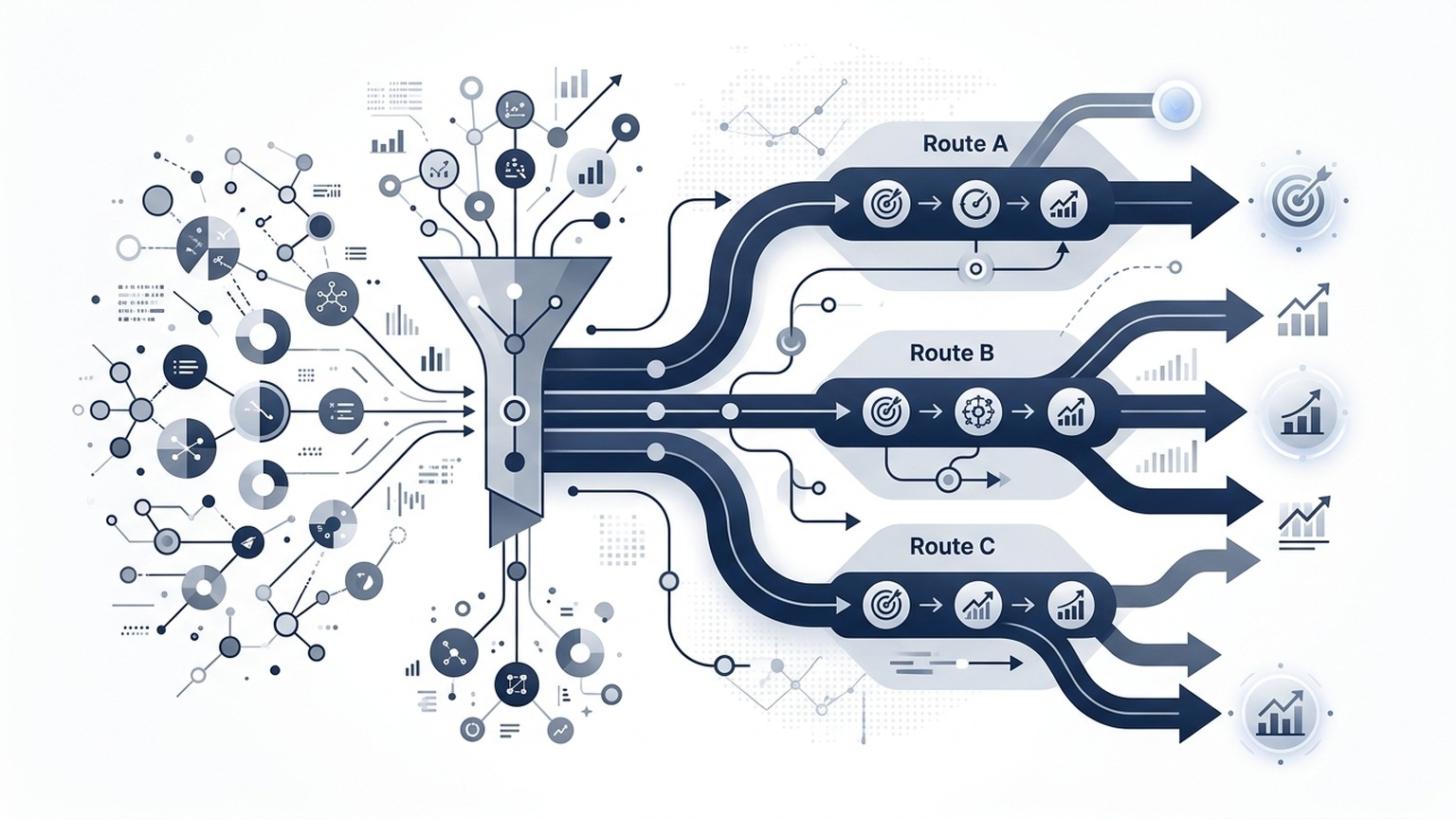
Targeting workflow
Step 1: Define the outcome you want
Start by naming the business outcome. Are you trying to grow newsletter subscribers, validate a product idea, improve paid acquisition, launch a new feature, or build authority in a niche?
Audience targeting depends on the outcome. A segment that is perfect for awareness may not convert quickly. A segment that converts may be too narrow for a broad content strategy.
Tip: Use a simple format: "We want to reach people who can help us achieve X within Y timeframe." This keeps targeting connected to the business.
Step 2: Build a segment map
Create a list of possible audience segments. Include your obvious audience, adjacent audiences, competitor audiences, emerging communities, and niche groups with strong pain.
For each segment, capture what they want, what they struggle with, where they spend attention, and what language they use.
Tip: Don't stop at job titles. "Growth marketer" is a role. "Solo growth marketer at a seed-stage SaaS trying to prove channel traction" is a targeting segment.
Step 3: Score each segment for opportunity
Not every audience deserves immediate focus. Score each segment using five dimensions: intent, urgency, reachability, competition, and fit.
Intent asks whether the segment is actively looking for a solution. Urgency asks whether the problem matters now. Reachability asks whether you can find and engage them. Competition asks whether the space is crowded. Fit asks whether you can genuinely help.
Tip: Use a 1 to 5 score for each dimension. The winning audience is often not the biggest. It's the one with the strongest total opportunity.
Step 4: Find the audience's real language
Messaging should come from the audience's words, not only your team's internal language. Study search queries, comments, reviews, Reddit threads, YouTube comments, support tickets, and competitor testimonials.
Look for repeated phrases. Look for emotional words. Look for the gap between what people say publicly and what they ask privately.
Tip: Save exact phrases. They can become headlines, FAQ questions, ad hooks, newsletter subject lines, and landing page copy.
Step 5: Choose the targeting angle
A targeting angle is the reason this audience should care now. It connects pain, desire, timing, and your offer.
For example, "founders who need productivity tools" is vague. "bootstrapped founders losing sales follow-ups because CRM setup feels too heavy" is a stronger angle.
Tip: Write three targeting angles per segment. Then choose the one with the clearest pain and easiest proof.
Step 6: Match channels to behavior
Don't pick channels because they're trendy. Pick channels because the audience already uses them for the problem you're solving.
A niche audience may be active in newsletters, LinkedIn comments, subreddit threads, Slack communities, podcasts, TikTok search, or YouTube tutorials. Your job is to match the channel to the moment of intent.
Tip: Separate discovery channels from decision channels. People may discover a problem on TikTok but compare solutions through Google, YouTube, and AI search.
Step 7: Create a small test plan
Turn the targeting strategy into experiments. Build one content cluster, one landing page variant, one paid audience, one creator partnership, or one email sequence.
Keep the test focused. You are not trying to prove everything. You're trying to learn whether the segment responds.
Tip: Define the success signal before launch. It could be qualified clicks, replies, saves, trials, demo requests, or conversion quality.
Step 8: Feed results back into audience intelligence
Audience targeting improves when you learn from real response. Track which messages earn attention, which objections show up, and which segments take meaningful action.
Then update your segment map. The workflow should become a loop.
Tip: Don't only measure performance. Capture language from responses. Comments, replies, and objections often reveal the next targeting angle.
Case Study: A Creator Education Brand Finds Its Best Segment
A creator education brand sold courses about building digital products. Its audience targeting was broad: creators, freelancers, coaches, and side-hustlers. The content performed well sometimes, but conversion was inconsistent.
The team assumed the audience wanted "passive income." That phrase was popular, but it attracted people who were curious, not ready.
Using an audience intelligence workflow, the team studied search queries, creator comments, newsletter replies, and course reviews. A sharper segment emerged: mid-level creators with a small audience who had already sold services but wanted to package their knowledge into a repeatable offer.

Creator case study
This group used different language. They didn't say "passive income" as much. They said "I don't want every client project to start from scratch," "I need a scalable offer," and "my audience trusts me but I don't know what to sell."
The targeting strategy changed.
The brand built a content series around turning services into products. It created a landing page for service providers with existing demand. It tested examples for designers, consultants, and coaches instead of generic creators. It also built a lead magnet about validating an offer before recording a course.
The result was stronger intent. Email signups were fewer than before, but reply quality improved. Sales calls were more specific. Course conversion increased because the offer matched a real transition moment.
The lesson is simple: broad targeting can create attention, but sharp targeting creates momentum.
How Klinko Supports Audience Targeting
Klinko helps teams build this loop faster. Instead of manually stitching together fragmented signals, teams can use Klinko to identify high-intent segments, compare audience opportunities, and translate consumer insights into targeting plays.
The value is not just data collection. It's decision support.
Klinko can help growth teams answer:
- Which audience segment should we prioritize?
- Which pain points are most urgent?
- Which messaging angles are already showing demand?
- Which channels and communities are worth testing?
- Which audience opportunities are under-served by competitors?
That makes Klinko a stronger fit for audience targeting than traditional tools that only manage contacts or monitor mentions.
FAQ
What is audience targeting?
Audience targeting is the process of selecting a specific group of people to reach with your content, product, campaign, or offer. Strong targeting uses intent, needs, behavior, and context, not only demographics.
How do you identify a target audience?
Start with a growth decision, map possible segments, study audience signals, score each segment by opportunity, and test messaging with the highest-fit group.
What is the difference between audience targeting and segmentation?
Segmentation divides the market into meaningful groups. Audience targeting chooses which segment to prioritize and how to reach it.
Why is audience intelligence important for targeting?
Audience intelligence reveals what different segments want, how they describe problems, where they spend attention, and which needs are gaining urgency.
How can Klinko improve audience targeting?
Klinko helps teams discover audience segments, analyze consumer insights, compare opportunities, and turn audience research into practical targeting strategies.
Try Klinko
Audience targeting gets easier when you stop guessing from broad personas and start working from live audience intelligence. Klinko helps growth teams move from scattered signals to clearer segments, sharper messages, and smarter targeting decisions.


